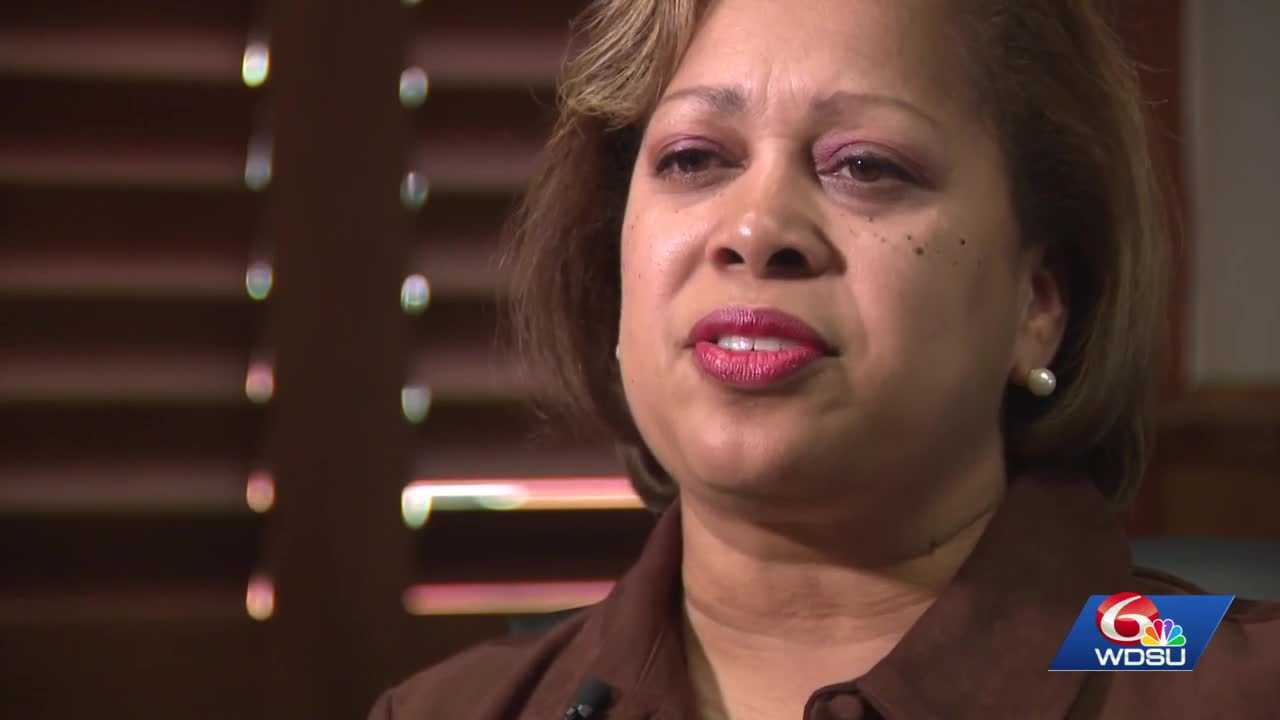
The Orleans Parish Clerk of Court is calling out the city for unpaid operating expenses and reduced funding as she says she is working to improve efficiency and resources in her office.
New Orleans residents who buy houses, vote in elections, are getting sued, or are accused of a crime all get those records through the clerk’s office.
“The reality is we impact your everyday life even if you don’t know that,” said Clerk Chelsea Napoleon.
Napoleon, who has been in her consolidated role overseeing both civil and criminal court for six months, said she is focused on increasing customer service levels, implementing technical upgrades, and adding resources for the community.
“When we came on board, there was some concern about the different softwares,” Napoleon said.
She also said she is working to make the office more efficient, including plans to extend the main filing counter to accommodate additional staff.
Clerk’s Office funding concerns:
Despite these efforts, Napoleon said her office is operating with reduced funding, receiving 40% of court fees instead of the previous 50%.
“You are adding responsibility and reducing funding for the office,” Napoleon said.
Additionally, Napoleon said the city has not paid bills for supplies and file storage.
“The city has not paid those bills,” Napoleon said. “There are several things that are still outstanding.”
Napoleon’s tenure has also been marked by political challenges, including a contentious legislative session that led to the consolidation of the clerk’s office.
“It was emotional. It was emotional for everyone in Orleans Parish,” Napoleon said. “During that process, what happened was terrible, and I’ve said that. In conjunction with that, I had a responsibility.”
Napoleon described the experience as a “political showdown” that exposed the complexities of government relationships.
“Why would I ask for a second job, more responsibility, and my pay did not change?” she said. “I have been a person who comes to work every day, do my best every day. Up until these last few months, I thought I had great relationships with everybody.”
She also addressed claims by Councilman J.P. Morrell that she did not attend budget hearings and that her office is sitting on a surplus.
In a statement from her office, Napoleon said:
“It is simply not true that the Clerk’s office is sitting on excess money. There are financial obligations to meet, essential services to maintain, and a responsibility to protect the office’s long-term financial stability.
“The funds being maintained are already allocated to legally mandated obligations and required expenditures, including disaster recovery, technology infrastructure, long-term lease obligations, and post-employment benefits for our employees. The office is also currently drawing on these resources to support ongoing operations. Therefore the balance that existed at the time of the 2025 audit, which is apparently being cited, is not what’s available today.
“Clerk Richard Napoleon has been prudent and intentional in managing resources to maintain the office’s financial health. The Clerk’s Office is too important to our courts and the people of New Orleans to risk its financial future.”
Morrell’s Director of Communications Monet Brignac Sullivan issued the following response:
“Regarding the budget meeting, the Clerk of Court was not included because the Clerk of Court’s budget does not fall under the City’s responsibility. Further, the quote from the video is in reference to the fact that the Clerk of Court refuses to meet with both Criminal and Civil Court judges who operate the Judicial Expense Fund (JEF), which is responsible for paying for the courts. Under the newly consolidated Clerk system, the legislature neglected to obligate the Clerk of Court to fund operations in Criminal Court; it was obviously implied because the legislature noted the cost savings to the City and the state as a basis for consolidation.
“The Criminal Court judges were at the budget hearing because the City remains committed to providing its historic funding to the Criminal Court judges, but we are unable to provide a replacement for the $4M+ that the state previously provided in support, in addition to city resources.
“The state obligation is now the Clerk of Court’s obligation under the consolidated model. While she sits on a surplus, the judges are contemplating which essential programs to cut. This is a problem, and it is the Clerk of Court’s problem.”
Mold concerns at the Clerk’s Office:
Napoleon also stressed the urgent need for upgrades to storage and evidence facilities, pointing to issues such as mold and inadequate storage bins.
She provided a tour of the building where court documents are stored, highlighting concerns about mold and humidity affecting the storage conditions.
Dozens of bins and trash bags are scattered across several areas, with visible mold present. Napoleon explained that the high humidity is noticeable as soon as you walk through the doorway of certain rooms.
VIDEO: Orleans Clerk of Court shows mold in storage areas
“There are standards as to how you maintain paper in terms of temperature and humidity control and other objects. So if you’re looking at the door before us, this is one of the areas where items are stored, and you can see the mold and mildew outside the door,” Napoleon said.
She expressed hopes to address these issues by bringing all storage areas for the clerk’s office up to proper standards.
Despite the challenges Napoleon says her office is facing, she is devoting her time to overseeing a high-stakes election on Tuesday.
“What I want people to know is that I’m dedicated to this process. We have been serving them every day,” Napoleon said.
In response to Napoleon’s concerns, a city spokesperson said, “City departments and outside agencies were invited to present their needs to the City Council. Those hearings continue through this week with final budget approval by mid-November.”
Napoleon said she views herself as a keeper of records, not a keeper of score, and is focused on her goal of serving the community.
READ MORE:Orleans Parish clerk of court addresses reduced funding, mold and storage issues in her office