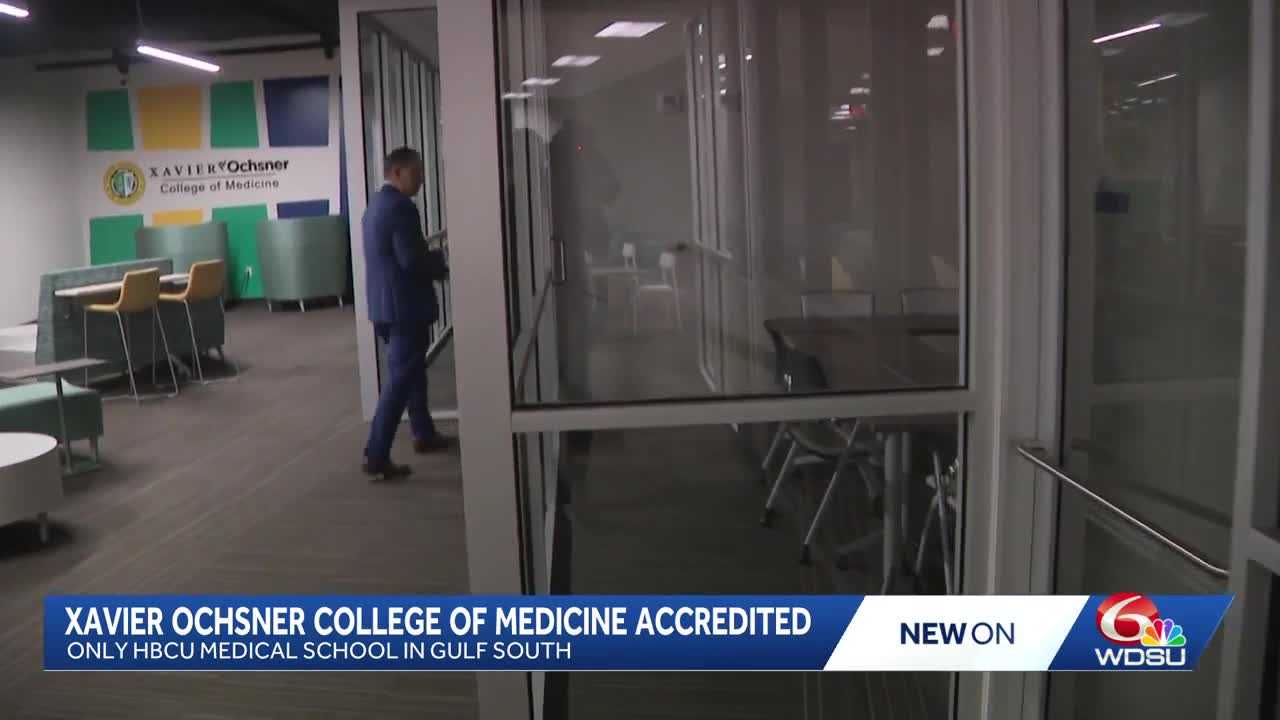
The Xavier Ochsner College of Medicine has received preliminary accreditation from the Liaison Committee on Medical Education, allowing the school to begin recruiting students for its first class.
The school, a partnership between Xavier University of Louisiana and Ochsner Health, plans to make applications available through the American Medical College Application Service in the coming weeks. The inaugural class is expected to begin in summer 2027.
The college will be the only historically Black college or university medical school in the Gulf South, according to the announcement. The school’s fact sheet says it will be the fifth historically Black medical institution in the country. It is located in Benson Tower in New Orleans’ BioDistrict.
The LCME, which accredits U.S. medical schools that grant medical doctorate degrees, granted the college candidate status in October 2025. It conducted a survey visit in June 2026 before awarding preliminary accreditation.
The school’s leaders say it will combine classroom instruction with clinical training through Ochsner. The college plans to prepare students to care for patients in New Orleans, the Gulf South and other communities.
The announcement comes as Louisiana faces physician workforce challenges. The release says 60 of the state’s 64 parishes are federally designated as Health Professional Shortage Areas. It also cites a federal projection that the country could face a shortage of more than 141,000 physicians by 2038.
The release says graduates of HBCU medical schools train nearly 70% of the nation’s Black physicians and are more likely to serve communities with significant health care needs.
The partnership formed in 2024. Xavier and Ochsner have worked together on other health and education programs, including the Ochsner-Xavier Institute for Health Equity and Research.
The college’s operations are projected to generate $152.5 million in economic impact across Louisiana by 2040, including $122 million in New Orleans, and support more than 1,185 jobs statewide, according to projections cited in the release. Physicians trained by the college are projected to contribute an additional $2.9 billion to the U.S. economy by 2040.